Carpenter Ant Control & Extermination in North & Central Jersey | Inspect Pest Control
Carpenter ants don't eat wood — they destroy it. Inspect Pest Control eliminates carpenter ant colonies and satellite nests throughout Essex, Morris, Bergen, Union, and Passaic Counties. 100% satisfaction guarantee.
Expert Carpenter Ant Control: Protect Your Home from Wood-Damaging Pests
Carpenter Ant Control & Extermination for North & Central Jersey Homes
If you're hearing faint rustling inside a wall at night, finding piles of what looks like sawdust near wood trim, or seeing large black ants wandering your kitchen in the middle of winter — you're likely dealing with carpenter ants. And unlike most ant problems, this one won't just resolve itself or respond to a can of spray. Carpenter ants are one of the few ant species that actually damage your home, and handling them correctly is the difference between a manageable issue and a multi-year structural problem.
At Inspect Pest Control, we treat carpenter ant infestations specifically — not as a generic ant call. We serve homes throughout Essex, Morris, Passaic, Union, and Bergen Counties, including Montclair, Cedar Grove, Verona, West Orange, Caldwell, Parsippany, Florham Park, East Hanover, Watchung, Berkeley Heights, Ramsey, and surrounding communities.
What Makes Carpenter Ants Different From Other Ants
Most ant problems are annoying. Carpenter ants are destructive.
Carpenter ants don't eat wood the way termites do — they excavate it. They chew out smooth, hollow galleries inside wooden structural members to build their nests, pushing the debris (called frass) out through small exit holes. The result is wood that looks intact on the outside but is structurally compromised on the inside. Over time, that compromise shows up as soft floors, sagging window frames, doors that stop closing properly, and in worst cases, actual framing failure.
A few things to know about carpenter ants specifically:
They prefer damp or damaged wood. Carpenter ants don't attack dry, healthy lumber. They target wood that's already been softened by moisture — leaky roof valleys, poorly flashed windows, deck ledger boards, window sills with failing caulk, wood against the foundation. This is why carpenter ant problems are often a symptom of a moisture problem somewhere in the home.
Colonies have multiple nests. Unlike most ant species, carpenter ants establish a primary colony (usually outside in a tree stump, woodpile, or dead tree) and then build satellite nests inside buildings where the queen isn't present. This matters for treatment — eliminating one visible nest usually isn't enough, because there are typically others.
They're active longer than you'd think. Carpenter ants can remain active inside heated homes year-round. If you're seeing large black ants in your kitchen in January, that's a strong indicator of an indoor satellite nest, not ants wandering in from outside.
The damage compounds. A small colony can mature into a full infestation with multiple satellite nests over a few years. The longer it goes, the more extensive the wood damage — and the more the eventual repair costs.
How to Tell If You Have Carpenter Ants (vs. Regular Ants or Termites)
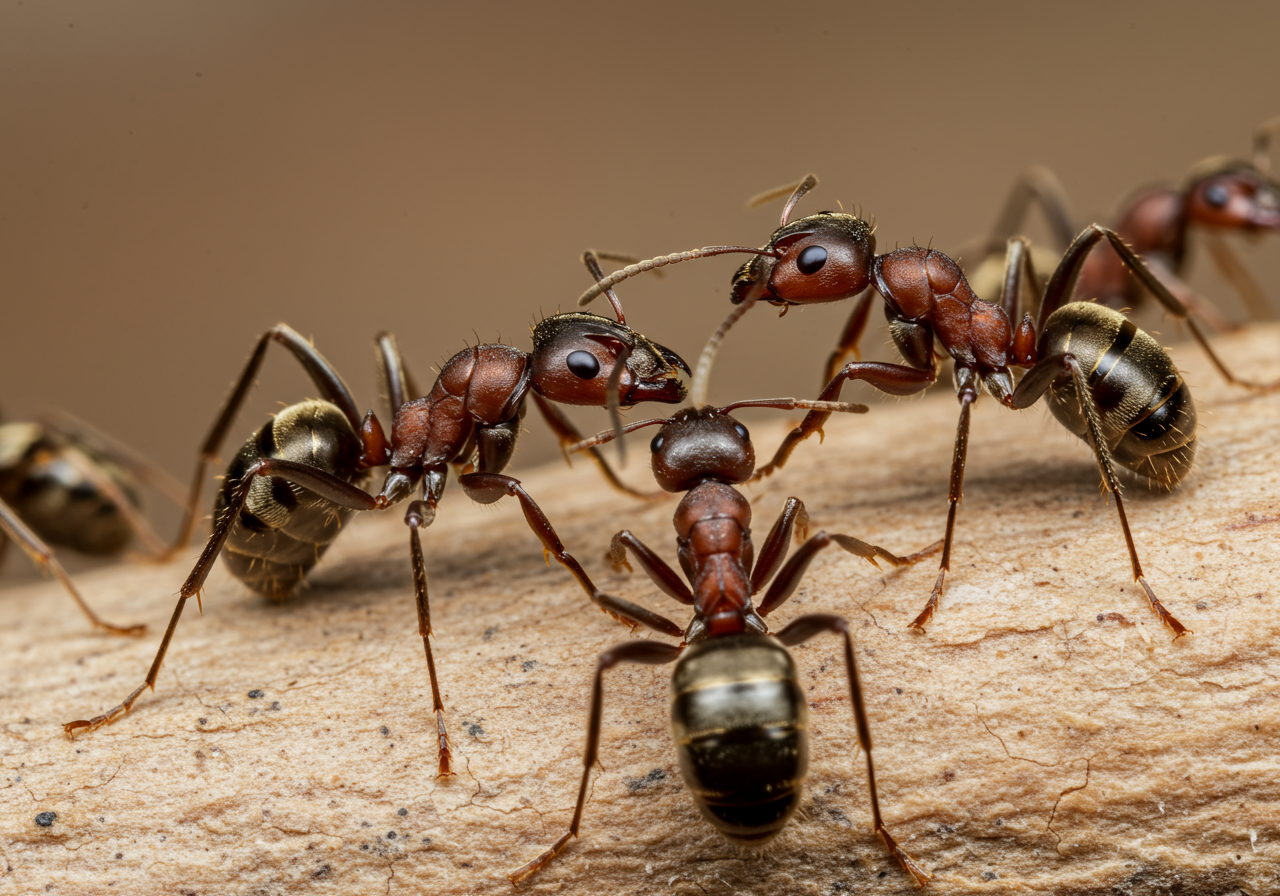
Size. Carpenter ants are big. Workers range from 1/4 inch to over 1/2 inch — significantly larger than the pavement ants or odorous house ants you'd see on a kitchen counter. If you're looking at a big black ant, it's almost certainly a carpenter ant.
Frass. Carpenter ants push excavated wood particles and insect debris out of their galleries through small slit-like openings. The frass looks like a mix of very fine sawdust and tiny black specks (insect parts). Finding frass piles near baseboards, window sills, or in basements is a high-confidence sign of active carpenter ants.
Sounds. A large, active colony makes noise. Homeowners frequently describe a faint rustling, crackling, or "crunching" sound coming from inside walls, especially at night when the house is quiet. That sound is workers moving through galleries.
Swarmers. In spring and early summer, mature carpenter ant colonies produce winged reproductives (swarmers) that emerge to start new colonies. If you're seeing winged ants indoors, especially around windows, that's a strong signal of an established indoor nest.
Damage vs. termites. Both can damage wood, but the damage looks different. Termite damage tends to have mud and soil present, and the interior of affected wood looks honeycombed and rough. Carpenter ant galleries are clean, smooth, and often visible when you break open a piece of infested wood. Finding clean, hollow tunnels inside wood — with no soil — is a classic carpenter ant signature.
Why DIY Treatment Usually Fails on Carpenter Ants
Carpenter ants are one of the hardest ant species to control without professional help. A few reasons:
The visible nest is rarely the only nest. Most homeowners treat what they can see — a trail, a small frass pile, a few ants near a window. The problem is that the primary colony is almost always somewhere else entirely, often outdoors in a tree or stump 20 to 100 feet from the house. Killing a satellite nest doesn't address the source, and the colony simply relocates or expands.
Surface sprays don't reach galleries. Carpenter ants live deep inside wood. A can of spray applied to a trail kills a few workers and alarms the rest — which often causes the colony to move the satellite nest to a different location inside your home. Now you've got the same problem in a new spot, and it's harder to find.
Moisture issues need to be addressed. Carpenter ants are there because wood has gotten damp. If you treat the ants without addressing the underlying moisture source, a new colony will establish in the same place within a year or two. Part of professional treatment is identifying and pointing out those conducive conditions.
The colony can be massive. Mature carpenter ant colonies can exceed 20,000 workers across a primary and multiple satellite nests. Meaningful control requires treatments that reach the full colony — not just the ants in front of you.
How We Handle Carpenter Ant Infestations
Carpenter ant treatment requires a different approach than regular ant control. Our process is specifically built around locating the full colony network, treating all active nests, and addressing the conditions that allowed the infestation in the first place.
Step 1: Thorough Inspection
Every carpenter ant treatment starts with a detailed inspection. We walk the full property — inside and outside — looking for active trails, frass piles, damaged wood, moisture sources, and entry points. We examine window frames, door frames, sill plates, crawl spaces, decks, roof lines, and any exterior wood against the foundation. The goal is to find the nests, not just the ants.
Step 2: Colony Mapping
Carpenter ant treatment works best when we understand where all the nests are. By observing trails (particularly at dusk, when workers are most active), following ants back to harborage areas, and identifying frass locations, we map out the primary colony and any satellite nests. This is the single most important step — and it's the one DIY treatment skips.
Step 3: Targeted Treatment
With the colony mapped, we treat each nest location directly using professional-grade methods selected for the specific situation. Exterior perimeter treatment addresses the main colony and entry points. Interior treatments target satellite nests in wall voids, window frames, and structural members. Our approach reaches the full colony network rather than just the workers you can see.
Step 4: Conducive Conditions Review
We walk you through any moisture issues, rotted wood, or structural vulnerabilities that contributed to the infestation. Some of these are easy fixes (re-caulking a window, redirecting a downspout). Others may need a contractor. Either way, you'll have a clear picture of what needs to be addressed to keep carpenter ants from coming back.
Frequently Asked Questions
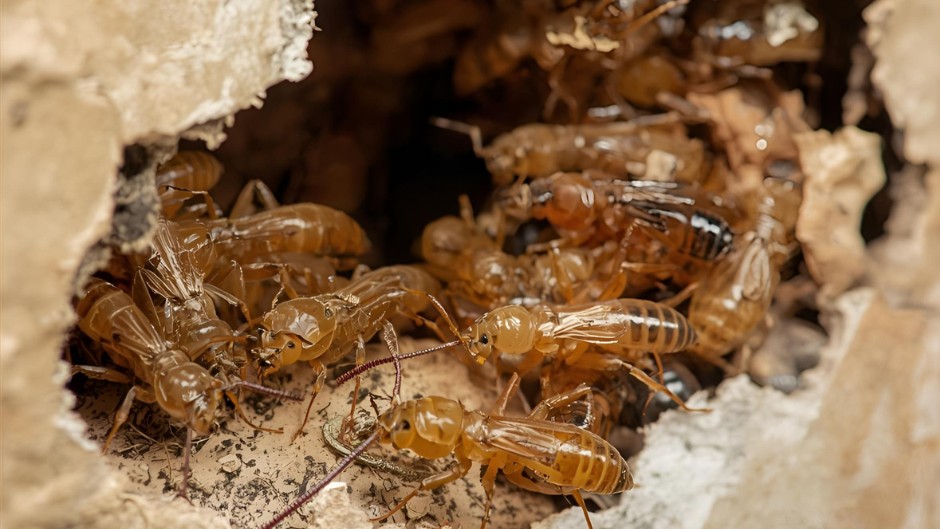
How do I know if I have carpenter ants or termites? Both damage wood, but they look and behave differently. Carpenter ants are large and black (or reddish-black), visible as individual insects walking around. They leave clean, smooth galleries inside wood and push out frass that looks like fine sawdust mixed with insect parts. Termites are small, cream-colored, and rarely seen in the open — they build mud tubes along foundations and leave honeycombed, dirty-looking damage inside wood. If you're not sure, the inspection will confirm which one it is within minutes.
Can I just spray them myself? You can, but it rarely works for long on carpenter ants. Surface sprays kill visible workers but don't reach the colony, and they often cause satellite nests to relocate deeper into the home — which makes professional treatment harder later. If you've already tried DIY treatment, let us know during the inspection so we can account for it.
Why do I keep seeing carpenter ants in winter? Because there's an indoor nest. Outdoor carpenter ants go dormant in cold weather, but satellite nests inside a heated home stay active year-round. Winter carpenter ant sightings are actually a high-confidence indicator that you have an established interior nest, not just occasional wanderers.
What attracts carpenter ants to a house? Moisture-damaged wood is the biggest attractant. Leaky roofs, poorly flashed windows, deck ledger boards, wood against the foundation, firewood stored near the house, and tree branches overhanging the roof all create conditions carpenter ants look for. Addressing moisture issues is a long-term part of keeping them away.
How long does it take to get rid of a carpenter ant infestation? Treatment response varies based on colony size and how many satellite nests are involved. Most infestations show significant reduction within two to four weeks, with full colony collapse typically within six to eight weeks. Mature infestations with multiple satellite nests may require longer treatment timelines.
Will I need to repair damaged wood? Possibly, depending on how extensive the damage is. For minor damage in non-structural areas (a window sill, a piece of trim), the wood can usually be left in place and simply treated. For structural damage (sill plates, floor joists, framing), repair is typically recommended — and we'll let you know if what we find warrants a call to a contractor.
Are your treatments safe for kids and pets? Yes. Our methods are targeted to where the ants are active — interior harborage areas inaccessible to children and pets, exterior perimeter applications that are safe, and localized nest treatments.
Protect Your Home from Carpenter Ants
If you're seeing large black ants in your home, finding frass near wood trim, or hearing rustling inside a wall — fill out the form below. We'll get back to you quickly with an honest assessment of what you're dealing with and a clear plan for your property.
Backed by our 100% satisfaction guarantee. If the carpenter ants come back, we come back — at no additional cost — until the problem is actually solved.
Carpenter Ant Control Service Areas in North & Central Jersey
Inspect Pest Control provides professional carpenter ant extermination throughout:
Essex County: Cedar Grove, Montclair, Verona, West Orange, Caldwell, North Caldwell, Livingston, Millburn, Maplewood, South Orange, Nutley, Belleville, Bloomfield, Glen Ridge, Fairfield, Roseland
Morris County: Parsippany, Florham Park, East Hanover, Morris Plains, Morristown, Madison, Chatham, Denville, Montville, Boonton, Whippany, Randolph
Passaic County: Wayne, Clifton, Little Falls, Totowa, Pompton Lakes, Ringwood
Union County: Summit, Westfield, Cranford, Springfield, New Providence, Watchung, Berkeley Heights, Scotch Plains, Mountainside
Bergen County: Ramsey, Allendale, Mahwah, Ridgewood, Ho-Ho-Kus, Waldwick, Wyckoff, Paramus, Hackensack, Teaneck, Glen Rock
Get Your Free Carpenter Ant Quote Today!
Carpenter ants do more than just wander—they can compromise the structural integrity of your property. Don't let these pests eat away at your home's value and your peace of mind. Fill out the form below for a free, no-obligation quote. The team at Inspect Pest Control will call you back promptly to provide a professional plan to stop the damage and protect your investment.
Behind the success stories
Read why customers choose us!

100% Satisfaction Guaranteed
We stand firmly behind the quality of our work with a 100% satisfaction guarantee. If you're not completely satisfied with our pest control service, we'll return to re-treat your home or business at no extra cost. If we still can’t resolve the issue to your satisfaction, we offer a full refund guarantee to ensure your peace of mind.

Family Owned and Operated
As a family-owned and operated business, we take great pride in our craftsmanship. We recognize the vital role of a clean and healthy home or business, and we're fully committed to providing top-notch pest management services.

4
reviews
170
reviews
55
reviews
8
reviewsGot an emergency?
Frequently Asked Questions
Frequently Asked Questions about our services
The most common sign isn't actually seeing an ant; it's finding frass. Unlike termites, carpenter ants don't eat wood—they excavate it to build galleries for their nests. As they chew, they push out a sawdust-like material called frass, which often contains fragments of dead insects and wood shavings. You might also hear a faint rustling sound inside your walls or spot large, black ants (winged or wingless) foraging in your kitchen or bathroom, especially near moisture-prone areas.
Yes, but the mechanism is different. While termites consume cellulose for food, carpenter ants damage wood by tunneling through it to expand their colonies. Over time, these galleries can significantly weaken structural beams, wall studs, and floor joists. Because they prefer damp, decaying wood, a carpenter ant presence often signals an underlying moisture issue or leak that could also be compromising your home’s integrity.
Carpenter ants act as moisture seekers that target areas where wood has been softened by water damage or high humidity. We frequently find them established under kitchen sinks, behind bathroom tiles, or around window sills and door frames where rain often seeps in. They also gravitate toward external attachments like roof shingles and deck ledger boards. If you have recently experienced a leak or have poor drainage near your foundation, these are the primary zones where a colony will set up shop.
Carpenter ants are primarily drawn to moisture and soft, decaying wood. Common triggers in New Jersey homes include overgrown vegetation touching the siding, clogged gutters that cause water to overflow onto window frames, or firewood stacked directly against the foundation. Even a small, undetected leak behind a shower wall or under a kitchen sink can create the perfect "soft wood" environment that invites a scout ant to signal the rest of the colony to move in.
The difficulty in treating carpenter ants lies in their nesting habit, where a primary queen is often hidden deep within a structural void or an outdoor wood source. A professional approach involves using specialized transfer-technology that the ants cannot detect. This allows the workers to unknowingly carry the treatment through the entire social network of the nest, reaching the hidden queen and neutralizing the colony at its core.
Other services
Some other service you might be interested in