Carpenter Bee Control & Extermination in North Jersey | Inspect Pest Control
Tired of watching carpenter bees drill holes in your deck, eaves, and trim? Inspect Pest Control eliminates carpenter bees and prevents future damage throughout Essex, Morris, Bergen, Union, and Passaic Counties. 100% satisfaction guarantee.
Carpenter Bee Control & Extermination for North & Central Jersey Homes
If you're watching big, buzzing bees hover around your deck or eaves every spring — and finding perfectly round holes drilled into your trim, fascia, or overhang — you've got carpenter bees. And while they look intimidating, the real problem isn't the bees themselves. It's what they're doing to your home.
Each hole marks the entrance to a tunnel system that gets longer and more extensive every year. Carpenter bees come back to the same wood, expand existing tunnels, and attract woodpeckers — which cause even more damage trying to dig the larvae out. What starts as a couple of holes in a deck rail becomes a compromised fascia board, a pitted cedar overhang, or a deck that needs significantly more repair than it should have.
At Inspect Pest Control, we handle carpenter bee problems before they turn into structural ones. We serve homes throughout Essex, Morris, Passaic, Union, and Bergen Counties — including Montclair, Cedar Grove, Verona, West Orange, Caldwell, Parsippany, Florham Park, East Hanover, Watchung, Berkeley Heights, Ramsey, and surrounding communities.
Why Carpenter Bees Are a Bigger Problem Than They Look
Most homeowners shrug off carpenter bees the first year. They look scary but they don't really sting (more on that below), they're usually gone by mid-summer, and the holes seem minor. Then next spring rolls around and there are more bees, more holes, and the original tunnels have been expanded.
Here's what's actually happening:
The tunnels don't go away when the bees do. Carpenter bees carve galleries up to several feet long into softwoods — cedar, pine, redwood, cypress — laying eggs inside and leaving offspring to emerge the following spring. Every year, those offspring come back to the same wood and either expand the existing tunnel or drill new ones nearby.
The damage compounds over years. A single hole on a deck rail is nothing. Ten years of carpenter bee activity in the same fascia board is a real structural problem. By the time homeowners get around to calling us, we're often looking at damage that accumulated across several seasons of ignored activity.
Woodpeckers make it dramatically worse. Woodpeckers can hear carpenter bee larvae moving inside wood and will peck large holes to extract them. If you've ever seen mysterious gouges on a fascia board or overhang, that's usually woodpeckers going after carpenter bee larvae. This damage can be extensive and often gets blamed on the woodpeckers when the root cause is the carpenter bee infestation.
Bare or unpainted wood is a target. Carpenter bees strongly prefer untreated, unpainted, or weathered softwoods. Decks with stained-but-not-sealed cedar, unpainted trim, exposed eaves, wooden play sets, and older wooden overhangs are all common targets. Painted wood is significantly less attractive to them.
What Carpenter Bees Actually Are (And What They Aren't)
A couple of things worth clearing up, because carpenter bees are often misidentified or overestimated as a threat:
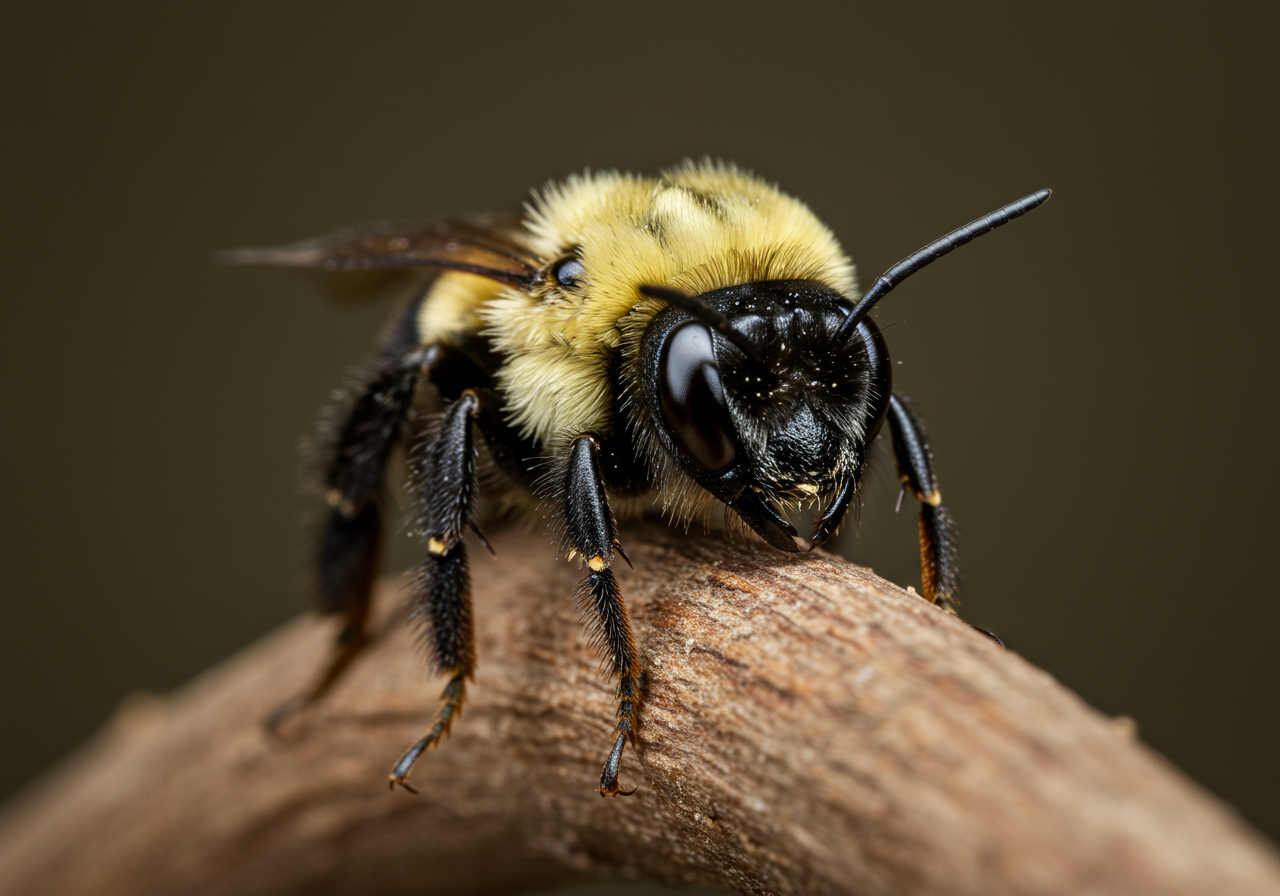
They're not bumblebees. Carpenter bees look similar — large, round, black and yellow — but carpenter bees have a shiny black abdomen while bumblebees have a fuzzy, hair-covered one. That's the giveaway.
The males can't sting. The big bees hovering aggressively around you near the holes are almost always males — which look intimidating but have no stinger. They're just territorial. Female carpenter bees can sting but rarely do unless directly handled. Carpenter bees are not a serious stinging threat the way wasps or yellow jackets are.
They're solitary, not colonial. Unlike honeybees or wasps, carpenter bees don't live in colonies. Each female drills her own tunnel and raises her own offspring. That's why you typically see them hovering individually rather than swarming.
They're not protected like honeybees. Honeybees are protected and should be relocated by beekeepers. Carpenter bees are not pollinators in the same way, are not legally protected, and can be treated using standard pest control methods.
How We Handle Carpenter Bee Problems
Carpenter bee treatment is different from most other stinging-insect work because the problem is inside the wood, not on top of it. Surface sprays kill the bees you can see but do nothing about the larvae inside the tunnels — which hatch, emerge, and continue the cycle next spring.
We use premium, professional-grade, EPA-approved products applied directly into the tunnel entrances. The treatment reaches the larvae and adults inside the galleries, not just the bees buzzing around outside. Once the treated wood dries and the adult bees are eliminated, the tunnel entrances can be sealed to prevent reinfestation and stop woodpeckers from being attracted to the activity.
The full approach:
Direct tunnel treatment — Professional-grade products applied into each active tunnel, targeting bees and larvae inside the wood.
Perimeter and surface treatment — Applied to the surrounding vulnerable wood areas to deter new females looking for nesting sites.
Plugging and sealing recommendations — After treatment, the tunnel entrances should be plugged to prevent reuse. We'll walk you through which holes are ready for sealing and when.
Prevention guidance — Most long-term carpenter bee prevention comes down to making the wood less attractive. We'll point out which areas of your home are at highest risk and what you can do (painting, staining, sealing) to make the problem less likely to return.
Our Carpenter Bee Control Process
Step 1: Inspection
We walk the property looking for active carpenter bee activity and existing damage. Common target areas include deck rails, overhangs, fascia boards, eaves, gable ends, playsets, pergolas, sheds, and any untreated softwood trim. We identify active tunnels, note areas of historical damage, and assess which wood is most vulnerable going forward.
Step 2: Targeted Treatment
We apply professional-grade products directly into active tunnels to eliminate adults and larvae inside the galleries. Surrounding vulnerable wood areas get a surface treatment to deter new females looking for nesting sites. Treatment timing matters — spring applications catch emerging adults before they drill new tunnels, while late spring and summer treatments target active nests.
Step 3: Sealing & Prevention Guidance
After the treated bees have been eliminated, tunnel entrances should be sealed to prevent reuse and discourage woodpeckers. We'll guide you on timing — sealing too early traps live bees and larvae, which can chew out new exits — and which wood areas are most likely to attract future activity.
Step 4: Follow-Up
Carpenter bee treatment often benefits from follow-up in the next season to catch any emerging adults from missed tunnels. For properties with significant historical damage or high vulnerability, ongoing treatment each spring is the most effective way to keep the problem from returning.
Why Spring Treatment Matters Most
Carpenter bees have a predictable annual cycle:
Spring (April–June): Adults emerge from last year's tunnels, mate, and drill new galleries or expand existing ones. This is when damage is actively being done and when you're most likely to see the bees hovering. It's also the ideal treatment window.
Summer (June–August): Females lay eggs in the tunnels and die off. Larvae develop inside the wood.
Fall (September–October): New adults emerge briefly to feed before retreating back into the tunnels for winter.
Winter: The next generation overwinters inside the tunnels, waiting for spring.
Treatment in spring catches the cycle at its most active point and prevents a full year of damage. Waiting until you see heavy activity in May or June still works, but starting earlier means fewer new tunnels and less woodpecker attention.
Frequently Asked Questions
How do I know I have carpenter bees and not bumblebees or wood-boring beetles? Carpenter bees have a shiny, hairless black abdomen — bumblebees are fully fuzzy. If you're seeing perfectly round half-inch holes in wood, especially in decks, fascia, or overhangs, with sawdust-like debris below them, that's carpenter bees. Wood-boring beetles leave much smaller holes and different damage patterns.
Will carpenter bees sting me? Probably not. The aggressive-looking males that hover near the tunnel entrances have no stinger. Females can sting but rarely do unless directly handled. Carpenter bees are not a serious stinging threat like wasps or yellow jackets.
Can I just plug the holes myself? Only after treatment. Plugging active tunnels before the bees and larvae have been eliminated traps them inside — and they'll chew new exit holes nearby, expanding the damage. Sealing should come after professional treatment and timing guidance.
How long does treatment last? A properly treated tunnel is permanently eliminated. However, new carpenter bees can establish new tunnels in nearby untreated wood each year, which is why properties with significant historical activity benefit from annual spring treatment.
Why do they keep coming back to my deck every year? Because carpenter bees strongly prefer the same wood their offspring emerged from — and because weathered, untreated softwoods are naturally attractive to them. If your deck is cedar or redwood and hasn't been sealed in a few years, it's a target. Ongoing treatment combined with sealing and painting vulnerable wood is the most effective long-term approach.
Are your treatments safe for kids and pets? Yes. Treatments are applied directly into tunnel openings and onto specific wood surfaces — not broadcast across your yard or outdoor living areas.
Stop the Drilling Before Damage Compounds
If you're seeing carpenter bees hovering around your deck, finding fresh holes in your trim, or noticing woodpecker damage on your fascia — fill out the form below. We'll get back to you promptly with an honest assessment and a plan for your property.
Backed by our 100% satisfaction guarantee. If the carpenter bees come back, we come back — at no additional cost — until the problem is fully resolved.
Carpenter Bee Control Service Areas in North Jersey
Inspect Pest Control provides carpenter bee extermination throughout:
Essex County: Cedar Grove, Montclair, Verona, West Orange, Caldwell, North Caldwell, Livingston, Millburn, Maplewood, South Orange, Nutley, Belleville, Bloomfield, Glen Ridge, Fairfield, Roseland
Morris County: Parsippany, Florham Park, East Hanover, Morris Plains, Morristown, Madison, Chatham, Denville, Montville, Boonton, Whippany, Randolph
Passaic County: Wayne, Clifton, Little Falls, Totowa, Pompton Lakes, Ringwood
Union County: Summit, Westfield, Cranford, Springfield, New Providence, Watchung, Berkeley Heights, Scotch Plains, Mountainside
Bergen County: Ramsey, Allendale, Mahwah, Ridgewood, Ho-Ho-Kus, Waldwick, Wyckoff, Paramus, Hackensack, Teaneck, Glen Rock
Get Your Free Carpenter Bee Removal Quote Today
Seeing holes in your trim or fascia? It’s time to act. Inspect Pest Control offers specialized treatments designed to stop carpenter bees in their tracks and prevent costly wood repairs. Get your free estimate by filling out the form below. We’ll reach out promptly to discuss your specific needs and provide a custom plan to keep your wooden structures intact and pest-free.
Behind the success stories
Read why customers choose us!

100% Satisfaction Guaranteed
We stand firmly behind the quality of our work with a 100% satisfaction guarantee. If you're not completely satisfied with our pest control service, we'll return to re-treat your home or business at no extra cost. If we still can’t resolve the issue to your satisfaction, we offer a full refund guarantee to ensure your peace of mind.

Family Owned and Operated
As a family-owned and operated business, we take great pride in our craftsmanship. We recognize the vital role of a clean and healthy home or business, and we're fully committed to providing top-notch pest management services.

4
reviews
170
reviews
55
reviews
8
reviewsGot an emergency?
Frequently Asked Questions
Frequently Asked Questions about our services
Carpenter bees look a lot like bumblebees but have shiny, black bodies instead of fuzzy ones. The big problem with these bees in Cedar Grove is their habit of drilling perfect, round holes into wood around your home – like decks, eaves, fascia, and even outdoor furniture. They create tunnels to lay their eggs, and over time, these tunnels can weaken wooden structures. They can also attract woodpeckers, who cause even more damage trying to get to the bee larvae.
Probably not. The aggressive-looking males that hover near the tunnel entrances have no stinger. Females can sting but rarely do unless directly handled. Carpenter bees are not a serious stinging threat like wasps or yellow jackets.
Because carpenter bees strongly prefer the same wood their offspring emerged from — and because weathered, untreated softwoods are naturally attractive to them. If your deck is cedar or redwood and hasn't been sealed in a few years, it's a target. Ongoing treatment combined with sealing and painting vulnerable wood is the most effective long-term approach.
A properly treated tunnel is permanently eliminated. However, new carpenter bees can establish new tunnels in nearby untreated wood each year, which is why properties with significant historical activity benefit from annual spring treatment.
Other services
Some other service you might be interested in