Expert Termite Control & Protection
Protect your property from hidden termite damage. Inspect Pest Control offers reliable, effective termite solutions to safeguard your biggest investment.
Your Home, Safe from Termites with Inspect Pest Control
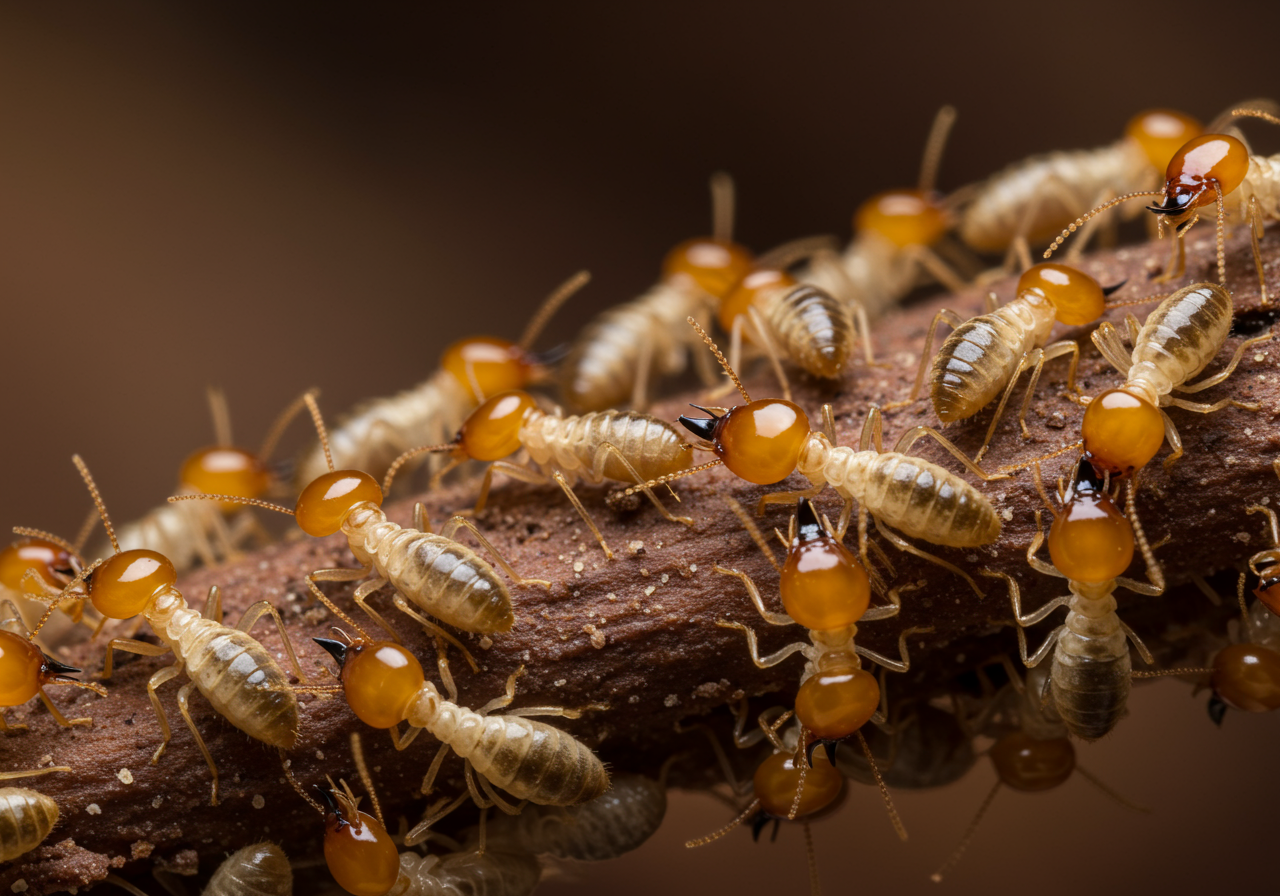
Termites are one of the most destructive pests a homeowner can face. They work silently behind walls, under floors, and in the soil—often causing thousands of dollars in structural damage before they’re ever detected.
The Silent Destroyers: Why Termites Are a Serious Threat to New Jersey Homes
Subterranean termites — the species most common in New Jersey — live underground and enter homes through the soil, often through hairline cracks in foundation walls, expansion joints, or wood-to-soil contact points. Termites cause more structural damage to American homes every year than fires, floods, and storms combined. What makes them uniquely dangerous isn't the damage itself — it's how invisible the problem is until it isn't. A colony can work through floor joists and sill plates for years before a single outward sign appears.
A few things make New Jersey homes particularly vulnerable:
- New Jersey's soil composition, moisture levels, and seasonal climate create favorable conditions for termite colonies year-round
- Older housing stock throughout Essex and Morris Counties often has crawl spaces, uninsulated sill plates, and original foundations that give termites easier access
- Mulch beds, wood decks, and firewood stored against the foundation are direct invitations
- Most homeowners insurance policies explicitly exclude termite damage — which means the financial exposure is entirely yours
Common signs of termite activity to watch for:
- Mud tubes running along foundation walls or basement piers
- Wood that sounds hollow when tapped
- Small piles of wings near doors, windows, or light fixtures — typically in spring
- Bubbling or peeling paint with no moisture source
- Visible damage to floor joists, sill plates, or subflooring
If you're seeing any of these, the time to act is now. Termite damage compounds — every month of delay makes the repair bill bigger.
Our Termite Protection Approach
We use two professional-grade treatments together — not because one is insufficient, but because they address different parts of the problem.
Trelona® ATBS Annual Bait Stations
Trelona ATBS, manufactured by BASF, is one of the most trusted subterranean termite baiting systems in the industry. We install tamper-resistant stations flush with the soil around your home's perimeter, creating an interception ring between active colonies in the ground and your foundation.
How it works: Foraging termites locate the stations through their natural food-seeking behavior and feed on the bait matrix. The active ingredient — Novaluron, a chitin synthesis inhibitor — is then carried back to the colony through social food-sharing, where it prevents termites from completing their molting cycle. Without molting, they die. Over time, the colony collapses entirely.
Trelona's station design matters. University research has shown termites locate Trelona stations faster than competing systems like Sentricon, thanks to the larger station size and vertical slot design that maximizes soil contact. The faster termites find the bait, the faster elimination begins.
What makes Trelona stand out:
- No drilling through floors, no trenching around the foundation, no disruption to landscaping
- Tamper-resistant Quik-Lock® cap keeps bait inaccessible to children and pets
- Effective against all subterranean termite species active in New Jersey
- Designed for annual inspection with ongoing protection between visits Termidor® SC Exterior Application
Bait stations handle the underground colony. Termidor® SC handles the surface.
We apply Termidor® SC — the industry's most widely used non-repellent termiticide — to the exterior foundation of your home. The active ingredient, fipronil, works through what BASF calls the Transfer Effect™: termites that contact the treated surface don't die instantly. Instead, they carry the product back to the colony and transfer it to other termites through grooming and food sharing, spreading the impact far beyond the individual insects that made surface contact.
Together, Trelona and Termidor address both angles — the subterranean colony underground and any termite activity reaching your foundation surface. It's a more complete approach than either method used alone.
Our Termite Service — What to Expect
Thorough Termite Inspection
Every service starts with a detailed inspection of your property. We examine the foundation perimeter, crawl spaces, basement, attic framing, sill plates, and any wood-to-soil contact points — looking for active termite activity, conditions conducive to infestation, and any prior damage.
You'll get a clear, honest assessment of what we find.
Step 2: Custom Station Layout
Based on the inspection, we develop a station placement plan specific to your property. Stations are positioned 10 to 20 feet apart around the perimeter, with tighter spacing near high-risk areas such as moisture zones, wood debris, or locations with prior activity. We walk you through the plan before any work begins.
Step 3: Professional Installation
Our technicians install each Trelona ATBS station flush with the soil, out of the path of lawn equipment and landscaping. Stations are pre-loaded with bait cartridges and active from day one. We apply the Termidor exterior treatment to the foundation as the second layer of the defense. A typical residential installation is completed in a half day or less.
Step 4: Ongoing Monitoring & Follow-Up
Termite control isn't a one-and-done service. We return for scheduled follow-up inspections, document activity in each station, replace depleted bait cartridges, and reassess placement as needed. If we detect elevated activity, we increase visit frequency until the situation is resolved.
Why North Jersey Homeowners Choose Inspect Pest Control for Termites
We're local. Inspect Pest Control is based in Cedar Grove, NJ. We understand the soil conditions, construction styles, and termite pressures specific to Essex, Morris, Bergen, Union, and Passaic Counties. When you call, you reach us directly — not a national call center.
We use professional-grade products. Trelona ATBS and Termidor SC are the same treatments used by leading pest management firms nationwide. We don't cut corners on chemistry.
We're straightforward about what's involved. Bait stations and Termidor are highly effective, but no termite treatment is a magic fix. If you have an active infestation inside the structure, we'll tell you what it will actually take to resolve it — including honest referrals to structural professionals when needed.
Termite Shield — Our Ongoing Protection Plan
For homeowners who want continuous, monitored protection rather than a one-time service, we offer the Termite Shield — a low monthly plan that includes both Trelona ATBS and Termidor treatment plus scheduled monitoring visits throughout the year.
Most termite damage happens between inspections. The Termite Shield eliminates that gap by keeping your home under active protection year-round. Learn more about the Termite Shield on its dedicated page, or ask us about it when you call.
Frequently Asked Questions About Termite Treatment in New Jersey
Do I need a termite inspection before buying a home in New Jersey? While New Jersey doesn't legally require a termite inspection for every real estate transaction, most lenders — especially for FHA and VA loans — require a Wood Destroying Insect (WDI) report. Beyond the legal requirement, a pre-purchase termite inspection is one of the smartest investments a buyer can make. We provide WDI inspections for real estate transactions throughout North Jersey.
How do I know if I have termites or carpenter ants? Both damage wood, but they behave differently. Termites produce mud tubes and consume wood from the inside out, leaving a papery shell. Carpenter ants excavate clean galleries but don't eat the wood — you'll often see coarse sawdust-like frass near their activity. When in doubt, call us. Misidentification leads to the wrong treatment, which wastes money and lets the real problem keep going.
Are termite bait stations safe for my kids and dogs? Yes. Trelona ATBS stations feature a tamper-resistant Quik-Lock® cap that requires a special tool to open, and Novaluron — the active ingredient — has low toxicity to mammals. Stations are installed flush with the soil, out of the way of normal yard activity.
How long does it take for Trelona ATBS to eliminate a termite colony? Once termites begin feeding on the bait, colony elimination typically occurs within approximately 60 days, depending on the size of the colony. Larger or multiple colonies may take longer. Throughout the process, your home remains actively protected by the Termidor exterior application.
What's the difference between Trelona ATBS and Sentricon? Both are reputable termite baiting systems. University research has shown that termites locate Trelona ATBS stations faster than Sentricon, due to the larger station size and vertical slot design. Trelona stations are also owned outright by your pest control provider rather than licensed through a dealer network, which means your service history stays with us, not a manufacturer.
Do I need a termite treatment if I've never seen termites in my home? The honest answer: it depends on your risk profile. Homes with prior termite history, crawl spaces, wood-to-soil contact, or neighboring properties with known termite activity are at higher risk. If you're unsure, a free inspection will tell you where your home stands.
Will termite treatments kill the wood-destroying insects already inside my walls? Trelona and Termidor are designed to eliminate the colony that feeds the above-ground activity. Termites inside the structure rely on the underground colony for moisture and reinforcement — when the colony collapses, the termites in the structure die off. For severe active infestations, we'll provide a direct assessment of whether additional treatment or structural repair is needed.
Termite Service Areas in North Jersey
We provide termite inspections, Trelona ATBS installation, and Termidor treatment throughout:
Essex County: Cedar Grove, Montclair, Verona, West Orange, Caldwell, North Caldwell, Livingston, Millburn, Maplewood, South Orange, Nutley, Belleville, Bloomfield, Glen Ridge, Fairfield, Roseland
Morris County: Parsippany, Florham Park, East Hanover, Morris Plains, Morristown, Madison, Chatham, Denville, Montville, Boonton, Whippany, Randolph
Passaic County: Wayne, Clifton, Little Falls, Totowa, Pompton Lakes, Ringwood
Union County: Summit, Westfield, Cranford, Springfield, New Providence, Watchung, Berkeley Heights, Scotch Plains, Mountainside
Bergen County: Ramsey, Allendale, Mahwah, Ridgewood, Ho-Ho-Kus, Waldwick, Wyckoff, Paramus, Hackensack, Teaneck, Glen Rock
Get Your Free Termite Protection Quote Today!
Worried about termites damaging your home? Don’t wait until the damage is done. At Inspect Pest Control, our local experts specialize in protecting homes throughout North Jersey. Whether you’re in Essex, Bergen, or Morris County, we provide the specialized care your property needs. Fill out our simple form below, and we’ll quickly call you back to discuss your concerns, answer your questions, and provide a clear, no-obligation quote for effective treatment and lasting protection. Safeguard your biggest investment with a personalized plan today!
Frequently Asked Questions
Frequently Asked Questions about Termites
Look for tell-tale signs like mud tubes on your foundation walls, discarded wings near windows or doors, or wood that sounds hollow when tapped. You might also notice bubbling paint or tiny holes in wooden structures. If you spot any of these in your Cedar Grove home, it’s best to contact Inspect Pest Control for a professional evaluation.
Termites are capable of causing devastating structural damage by consuming the cellulose found in wood, drywall, and even flooring. Left untreated, a colony can eat through support beams and floor joists, leading to sagging floors, jammed doors, and warped window frames. Because this damage occurs inside the wood, it is often invisible until the home becomes structurally unsound. Most homeowners' insurance policies do not cover termite damage, making a proactive monitoring system like ATBS the most cost-effective way to protect your property's value.
Unfortunately, termites are a continuous threat to homes throughout the year. While you might notice termite swarms more during warmer seasons, the worker termites are constantly active underground, diligently searching for food sources like the wood in your home. That’s why consistent monitoring and protection are important, regardless of the season.
Yes. We utilize the Advance Termite Bait System (ATBS), which is one of the lowest-impact ways to protect your home. Rather than pumping hundreds of gallons of chemicals into the soil, ATBS stations are discreetly installed in the ground around your home’s perimeter. This system targets termite colonies specifically using a localized bait that is inaccessible to children and pets, providing 24/7 structural protection with peace of mind.
While they look similar, you can tell them apart by three main features. Termites have a thick waist while ants have a pinched narrow waist. Termite wings are equal in length whereas ant wings have longer front wings and shorter back wings. Finally, termites have straight antennae while ants have elbowed or bent antennae.
We recommend a professional termite inspection at least once a year. Because termites are "silent destroyers" that work from the inside out, significant structural damage can occur long before a homeowner notices a problem. Regular inspections are especially critical for homes with wooden decks, mulch beds, or moisture issues in crawlspaces.
Other services
Some other service you might be interested in